Warehouse Floor Coating Built for Forklift Traffic
OR-E41 epoxy primer, OR-621 basecoat, and OR-75DCL polyaspartic topcoat build one bonded film over concrete that has been repaired and profiled properly first. Concrete Mender structurally rebuilds spalled joints and cracked slab instead of just filling them. Most bays go back under traffic the same shift the crew packs up.
Get a Floor Spec & Budget NumberWhat a Warehouse Floor Actually Has to Survive
Downtime Measured in Hours
OR-75DCL is a polyaspartic. It cures fast enough that a bay primed in the morning takes foot traffic that evening and forklift traffic the next shift. Shutting down a pick module for a week to wait on epoxy cure costs more than the floor does.
Point Loads, Not Just Foot Traffic
A loaded pallet rack leg concentrates thousands of pounds onto a few square inches, and a hard-tire forklift wheel does the same thing while moving. The OR-621 basecoat carries build and impact resistance; the topcoat carries abrasion and chemistry. Neither has to do both jobs.
Joints Rebuilt, Not Caulked
Ninety percent of warehouse floor complaints start at a control joint or a spall. Concrete Mender penetrates the surrounding concrete and cures into it, so the repair becomes part of the slab rather than a plug sitting in a hole waiting to pop out under the next wheel.
Striping, Zoning and Cleanability
Aisle lines, hazard zones, and equipment footprints go down as part of the coating build instead of as tape or floor paint applied over it. A seamless topcoat also means a scrubber actually picks the dirt up rather than pushing it into an open profile.
Floors We Coat
Every one of these has a different wear mode. The build changes; the philosophy — repair, profile, prime, build, topcoat — does not.
- Distribution center pick aisles
- Manufacturing & production floors
- Cold storage & freezer slabs
- Loading docks & dock levelers
- Racking bays & staging areas
- Forklift battery charging rooms
- Maintenance & tool shops
- Chemical storage & containment
- Packaging & palletizing lines
- Equipment & vehicle hangars
The Warehouse Floor System, Layer by Layer
Five components. Which ones a job needs depends on slab condition, moisture readings, and what rolls across it.
Warehouse Floors Fail at the Joints First
Walk any distribution center that is five years past its last floor job and you can map the traffic patterns without looking at a single report. The failures are not in the middle of the bays. They are along the control joints, at the dock approach, at the turn radius where the reach trucks pivot, and around every rack leg that has been hit once.
That pattern tells you something: the coating was rarely the first thing to go. The concrete edge under it spalled, the joint filler compressed and tore, and the film then had nothing to hold onto. A perfectly good topcoat delaminated because the substrate beneath it moved.
So the sequence matters more than the product list. Repair the joints and spalls structurally with Concrete Mender. Profile to CSP 3–5 so the primer has mechanical tooth. Test moisture vapor emission before you commit to a system. Then prime with OR-E41, build with OR-621, and wear-coat with OR-75DCL. Skip a step and you have bought a warranty argument, not a floor.
What the Numbers Look Like
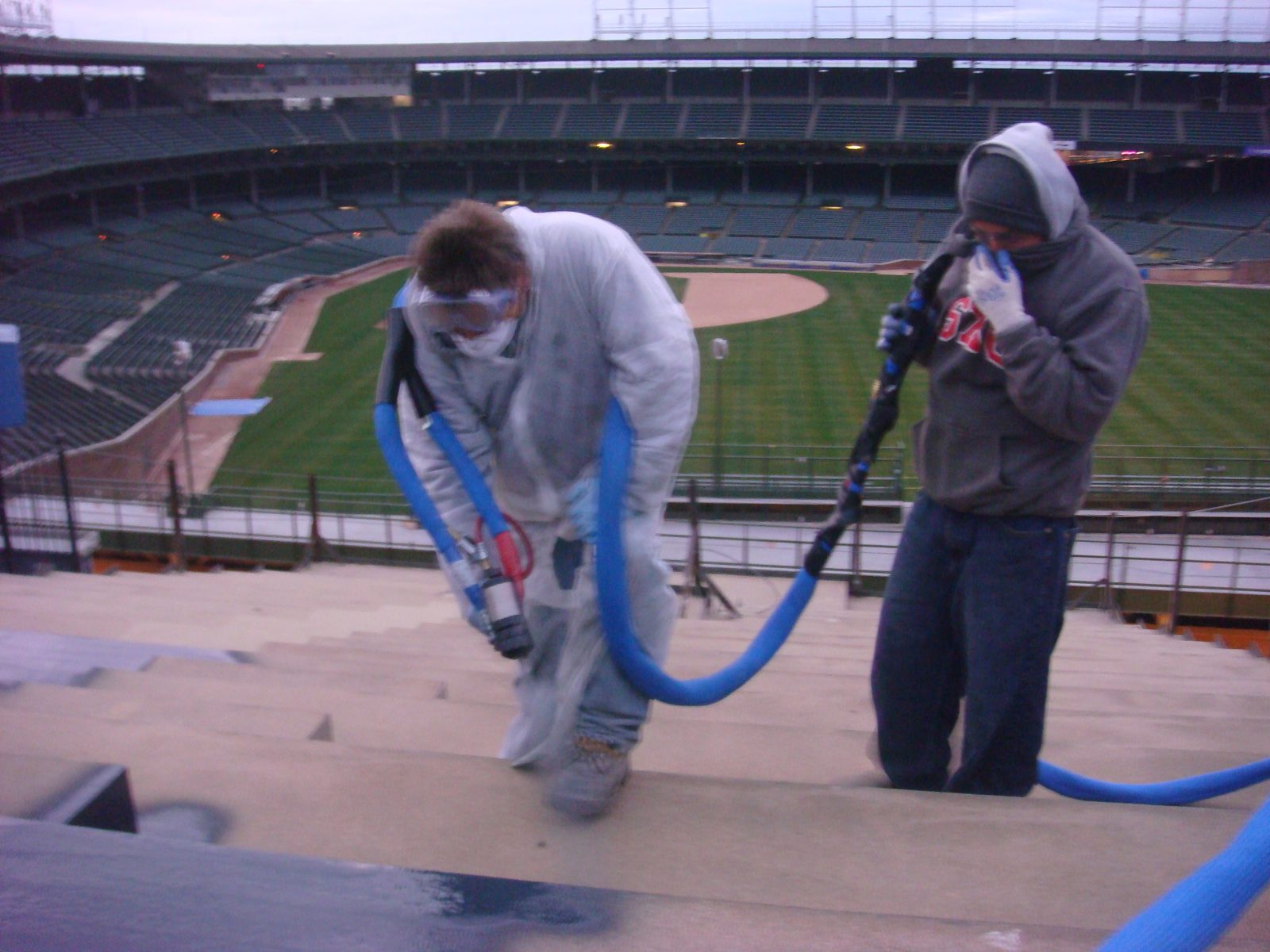
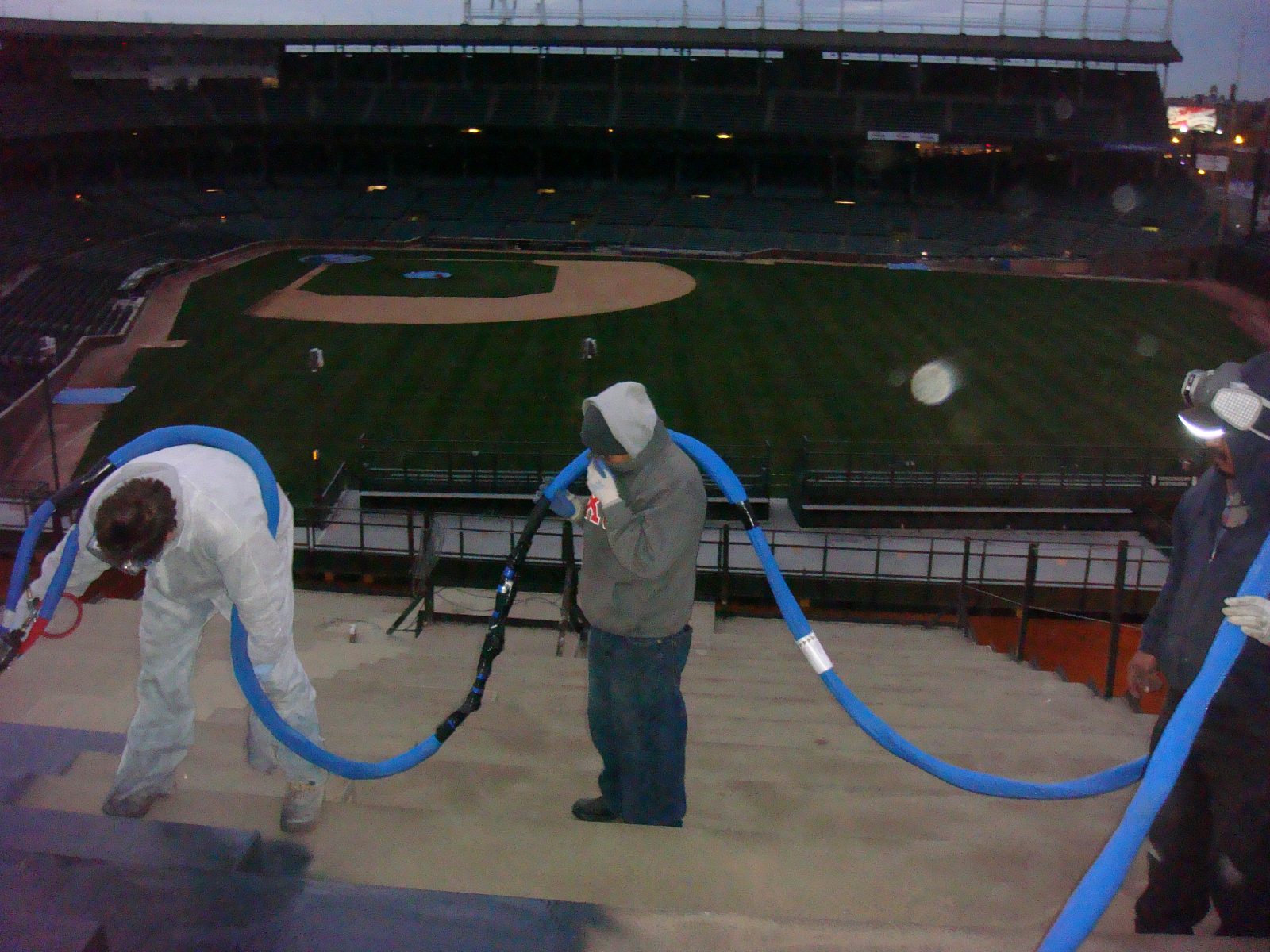
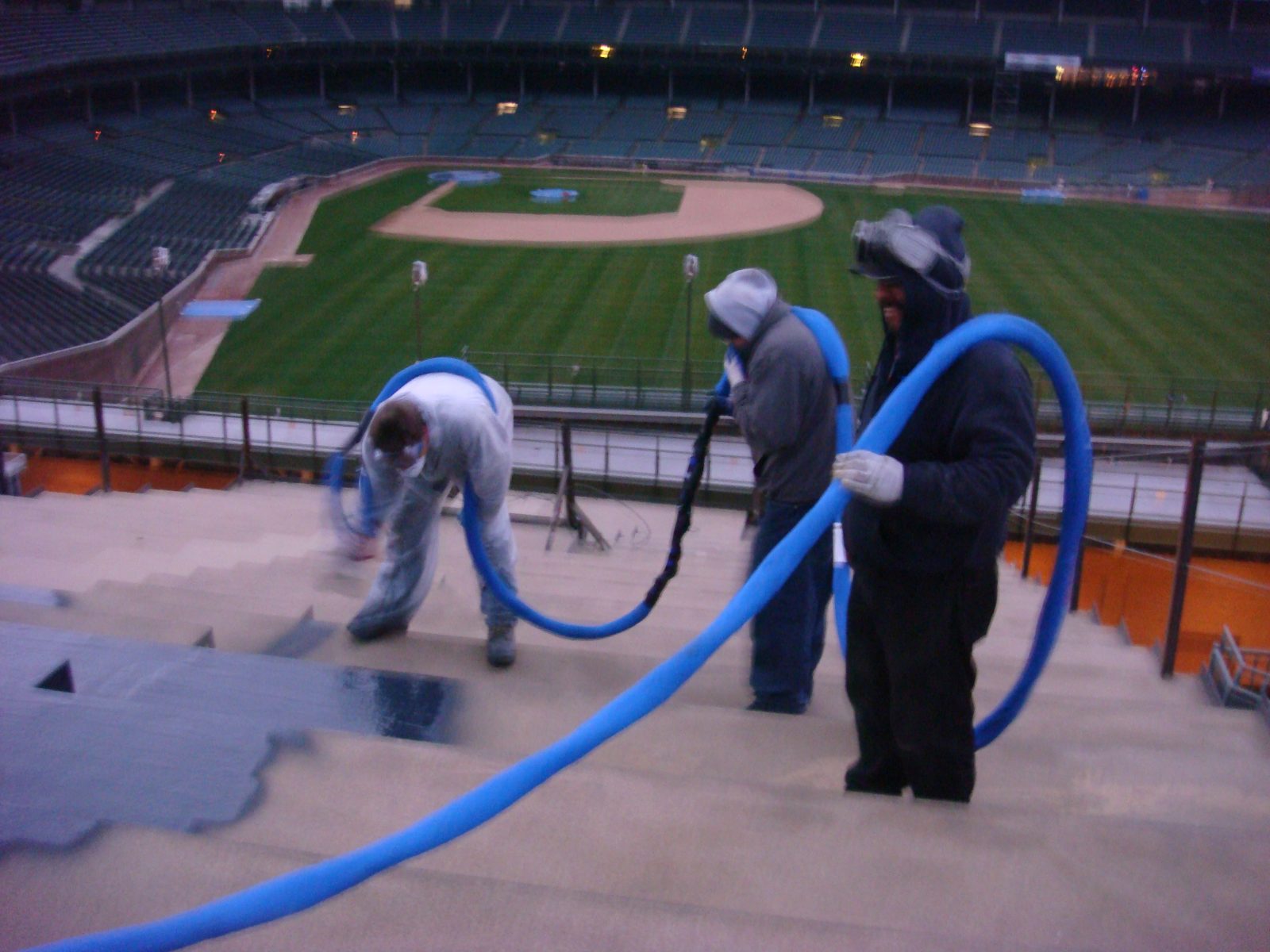
Installed Warehouse and Industrial Floors
Send Us the Slab Condition and the Square Footage
Tell us the age of the slab, what rolls across it, what gets spilled on it, and whether you have moisture numbers. You will get back a layer-by-layer spec, a coverage calculation, and a budget range. Commercial floor contractors: mention your region and we will include the wholesale schedule.
Request a Floor SpecGet a Floor Spec & Budget Number
Tell us about your project and we will follow up with product details, technical data sheets, and pricing.
Frequently Asked Questions
Frequently Asked Questions
What facility managers and commercial floor contractors ask us most.
Slab Condition & Preparation
How do I know if my slab has a moisture problem?
You test it. ASTM F1869 calcium chloride measures moisture vapor emission in pounds per 1,000 sq ft per 24 hours; ASTM F2170 uses an in-situ relative humidity probe drilled into the slab and is generally the better indicator on slab-on-grade. Visual signs — dark patches, efflorescence, a previous coating that blistered or peeled in sheets — are strong hints, but they are not a number you can spec against. Test first; the results change which primer we send.
Can you coat over an existing epoxy floor?
Sometimes, and it depends entirely on how well the old system is bonded. Sound, well-adhered coating can be abraded and overcoated. Anything delaminating, blistered, or lifting at the edges has to come off — mechanically, back to concrete, then profiled to CSP 3–5. Coating over a failing film just means the new floor fails on the old floor schedule.
What profile does the concrete actually need?
CSP 3–5 by diamond grinding or shot blasting, depending on system build. Higher build systems want the more aggressive end of that range. Acid etching does not reliably reach CSP 3 on a hard-troweled warehouse slab and leaves residue that interferes with adhesion — we do not spec it for industrial work.
Do the control joints have to be dealt with first?
Yes, and it is the step most often cut from a bid. Joint edges and spalls are repaired with Concrete Mender before profiling. Because it penetrates and cures into the surrounding concrete rather than sitting in the cut as a separate body, the repaired edge carries wheel load like slab instead of like filler. Coat over a compromised joint edge and the coating will telegraph and unzip from there.
Downtime & Installation
How long is the area out of service?
With the polyaspartic OR-75DCL topcoat, typically foot traffic the same day and forklift traffic the next shift. Full chemical cure runs 5–7 days, but that only limits aggressive spill exposure, not normal traffic. The bigger schedule driver is usually prep — grinding and joint repair take longer than coating does.
Can the work be phased so we never fully shut down?
Almost always. Most warehouse floors are installed in zones on nights and weekends, aisle by aisle or bay by bay. Fast cure is what makes phasing viable — you are handing back a section before the next shift rather than fencing off a quarter of the building for a week.
How is aisle striping and zone marking handled?
Lines go down as part of the coating build and are locked in under the topcoat, so a scrubber cannot lift them and a pallet corner cannot peel them. This is the practical difference between a coated floor and a painted floor — tape and floor paint applied on top of a finished surface are consumables that need replacing on a cycle.
Do you provide installation, or just material?
We supply material, written specs, and technical support nationwide, and we work with commercial floor contractors who install it. Tell us your location and the scope and we will point you at applicators in your region — or supply your own crew directly if you self-perform.
Performance & Cost
Will it hold up to hard-tire forklifts and pallet jacks?
That is what the build is for. Hard-tire wheels concentrate load and abrade rather than cushion, so the answer is film thickness in the OR-621 basecoat plus a hard, abrasion-resistant OR-75DCL wear coat above it. A 30–45 mil system handles standard warehouse traffic; heavy manufacturing and dock approaches go up from there.
What chemicals does the system resist?
The topcoat handles the common industrial list — hydraulic fluid, motor oil, coolant, most cleaners, fuel, and battery acid at typical splash exposure. Resistance is partly a function of build and dwell time: the thicker the system, the longer a spill takes to matter. Send us the actual chemical list and concentrations for a containment area and we will spec the build against it rather than guessing.
Is a polyaspartic topcoat worth it over standard epoxy?
For warehouses, usually yes, for two reasons that have nothing to do with marketing. First, cure speed — it is what allows same-day and phased return to service. Second, UV stability — epoxy ambers and chalks under skylights and inside dock doors, and on a large floor that discoloration is uneven and obvious. Epoxy still earns its place as the primer, where neither of those matters.
What does a warehouse floor coating cost per square foot?
Material is the smaller variable; prep drives the number. A sound slab needing a light grind and a 30 mil system is a very different job from a spalled slab with 4,000 linear feet of joint repair and a moisture problem. Send square footage, slab age and condition, joint linear footage, and moisture readings if you have them, and we will give you a real budget range rather than a per-foot number that will not survive the site visit.
Still Have a Question?
Ask it directly. You will get an answer from someone who has specified these systems on real facility floors.
Ask a Question